
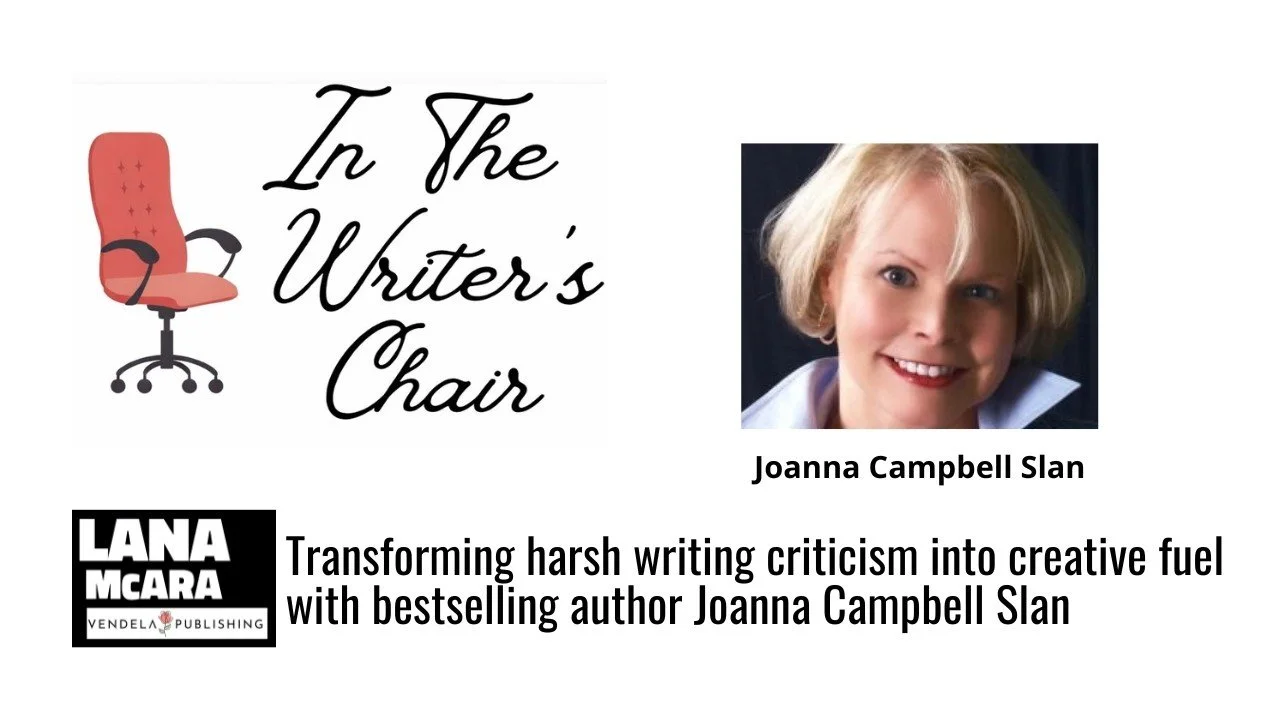
How Writers Can Handle Criticism Without Losing Confidence
Lana McAra interviews bestselling author Joanna Campbell Slan on In the Writer's Chair about handling criticism and writing confidence.
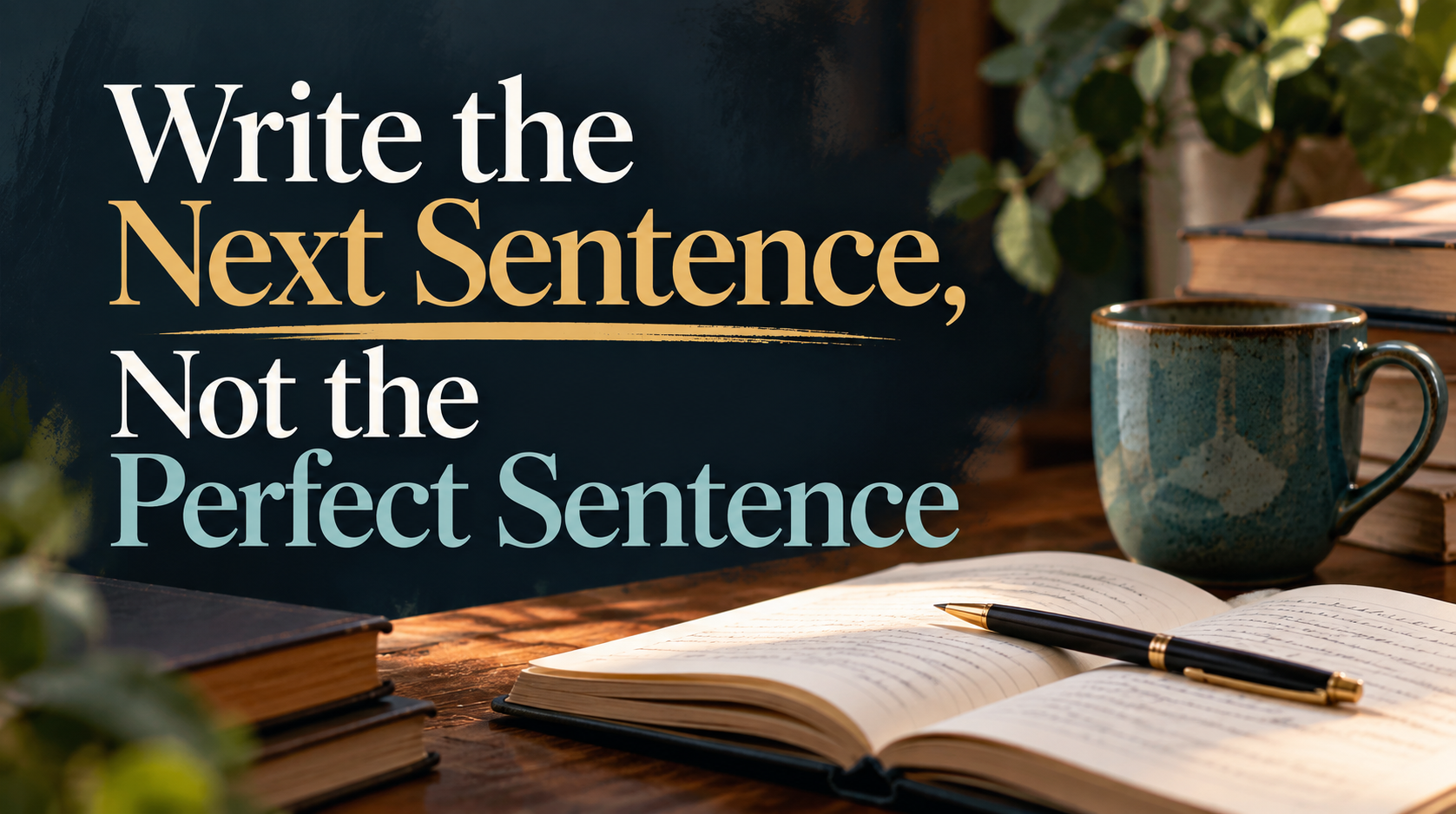
Write the Next Sentence, Not the Perfect Sentence
Writing desk with an open notebook and the words “Write the Next Sentence, Not the Perfect Sentence.”

How to Research Historical Fiction Without Getting Lost in the Research
Vintage books, maps and a magnifying glass illustrating research for historical fiction writers.
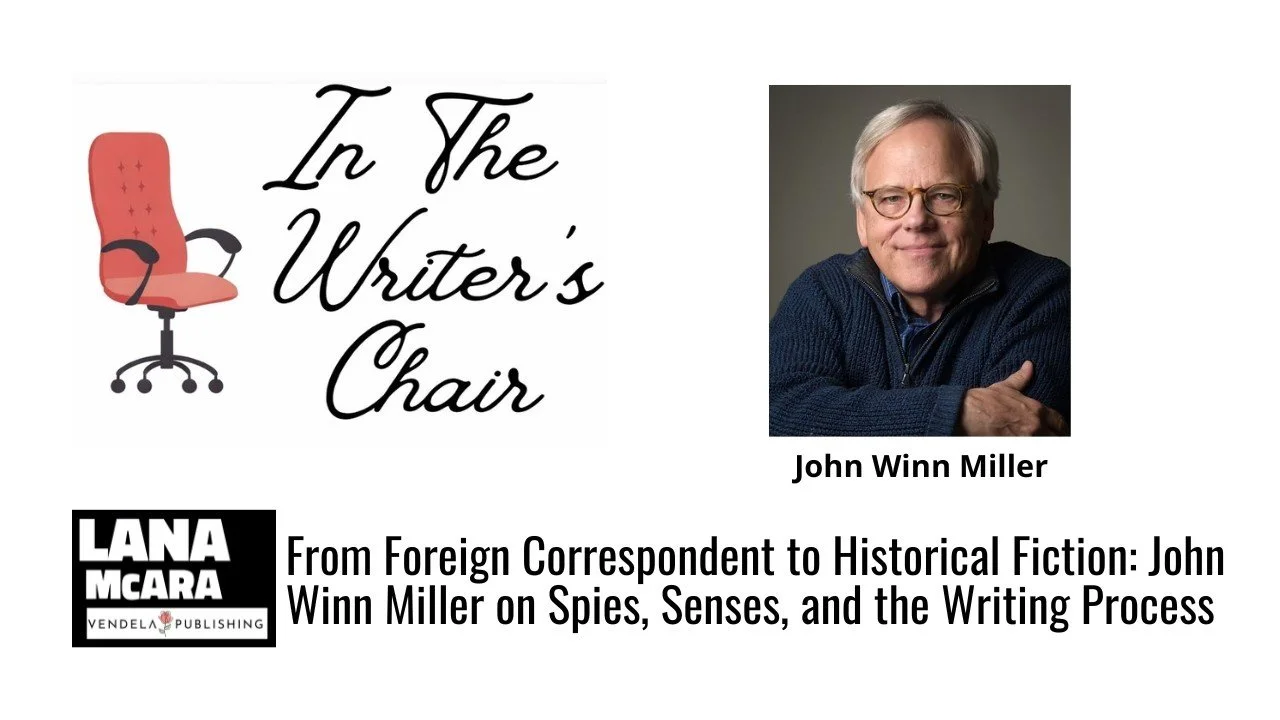
Writing Historical Fiction: John Winn Miller on Research and the Writing Process
John Winn Miller featured on In The Writers Chair with Lana McAra

Writing Children's Books for Two Audiences: The Child and the Adult
Mother and child reading together, illustrating writing children's books for both children and adults.

When a Character Is Closed, Use a Key to Open Them Up
When a character feels flat, more backstory isn't always the answer. Discover how a Character Key can reveal vulnerability, contradiction, humor, and depth through a simple relationship.
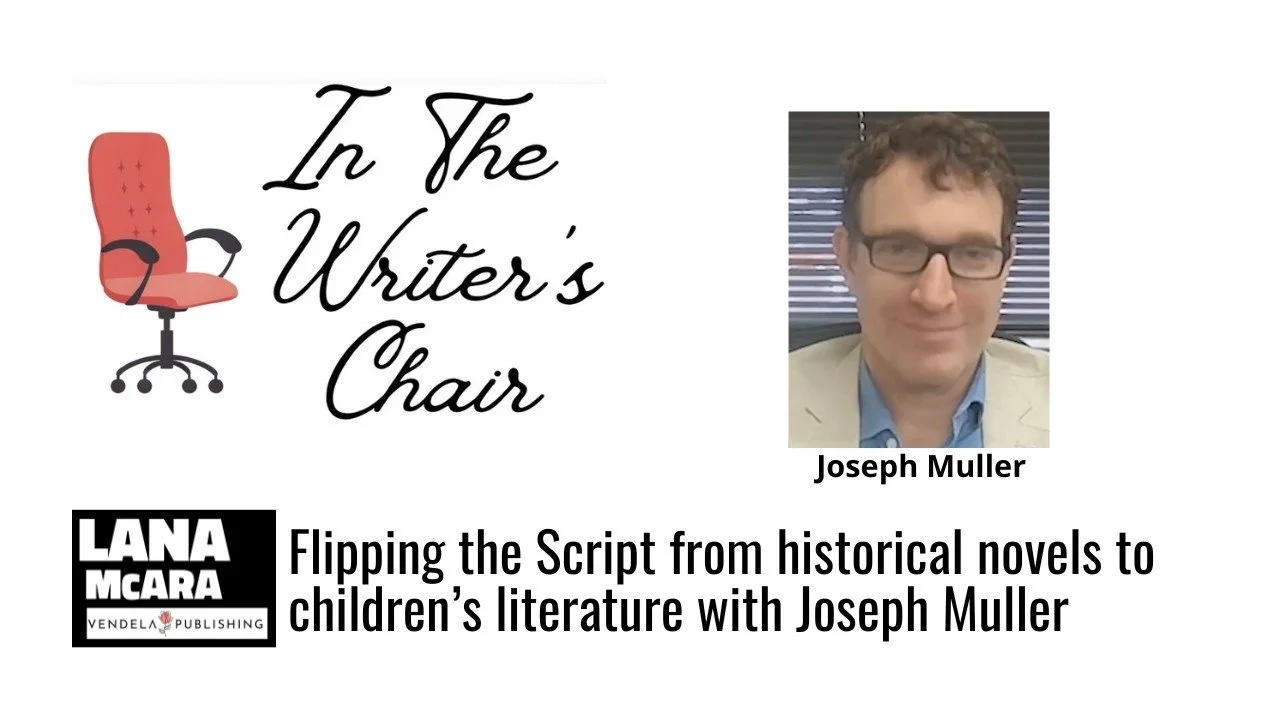
Writing Children’s Books: Joseph Muller on Story, Collaboration and Audience
In The Writers Chair interview with children's book author Joseph Muller

From Overwhelmed to In Control: Navigating the Real Work of an Author
In the writing life is one moment most authors don’t expect. It doesn’t happen when they start writing. It doesn’t even happen when they finish the manuscript.
It happens somewhere in between a conversation about ISBNs, printing costs, metadata, distribution channels, and marketing plans—when the full scope of publishing reveals itself.
The reaction is almost universal: “Oh my gosh… this is a lot.”
They’re not wrong.
The Hidden Job No One Talks About
Writing a book is a creative act. Publishing a book is a logistical one.
Being a career author? That’s a full-time job disguised as a passion project.
In one writing lab conversation, an author described sharing everything she had learned

The Secret to Author Momentum: Why Community Matters More Than You Think
Many writers picture success the same way: write a great book, publish it, and readers will somehow find it.
It's an appealing vision—but it's incomplete.
Books don't create momentum by themselves. People do.
A recent conversation reminded me of this truth. An author attended a local reader event with high hopes. She brought her books.
She was the only author who showed up.
She could have easily called the event a failure. Instead, something unexpected happened. Meaningful conversations led to fresh ideas, stronger relationships, and plans for a better event in the future.
That's how momentum really works. It rarely arrives as a sudden breakthrough. More often, it's built one genuine connection at a time.

She Tried to Leave Her Publisher
It all started with a simple decision. An author—experienced, capable, with more than thirty books to her name—decided she wanted to take one of her titles in a different direction.
Not abandon it. Not rewrite it.
Just… move it.
Reposition it. Handle it herself. Try something new.
Reasonable.
Except it wasn’t simple.
The Price of Leaving
When she contacted her publisher, the response was polite. Professional. And very specific.
She would have to pay a fee.

How to Sell Books (Without Selling)
Every author recognizes the moment.
You’ve set up your table. The books are neatly arranged. Maybe you have a banner, a tablecloth, something that says you belong here. You’re ready.
Someone walks by.
They slow down… glance at your books… and keep moving.
In that split second, most authors make the same move.
They start talking.
They explain the book. They summarize the plot. They reach—a little too quickly—for a reason the passerby should care.
That’s the exact moment the sale quietly slips away.

Is Your Book a Hobby or a Business?
In almost every author’s journey, they start with excitement—ideas, concepts, characters, and the satisfaction of finishing something meaningful.
And then quietly, the questions change:
· How much does this cost?
· What do I need to invest?
· Will I ever make it back?
That’s the moment the real question appears:
What am I actually building here?
“What am I actually building here?”
The Line Most Authors Don’t See
On the surface, all authors look the same. They write. They publish. They share their work with the world.
But underneath are two very different paths:
The hobbyist path and the business path
The difference isn’t talent. It isn’t ambition.
It’s the foundation for your decisions.

From War Zones to Story Worlds: Crafting Fiction from a Life Fully Lived with Fred Yager
What happens when a war correspondent, Hollywood screenwriter, and strategic storyteller turns to fiction?
In this episode of In The Writers Chair, Lana McAra sits down with Fred Yager, a writer whose career spans the Vietnam War, the Associated Press, major film studios, and global communications strategy. His journey is anything but linear—and that’s exactly what makes his storytelling so compelling.
Fred shares how his early experiences covering real-world conflict shaped his instinct for narrative truth—and how those instincts carried into screenwriting, where he learned the realities of Hollywood, where he had thousands of scripts optioned, but only a handful produced. Instead of letting stories sit unseen, he’s now transforming those screenplays into novels—where creative freedom is far greater.

The Second Book Problem: How Authors Learn to Keep Going
The first book is a miracle.
It appears out of years of silence, doubt, false starts, abandoned drafts, and late-night promises to yourself. It carries all the weight of your hopes. It represents the moment you finally became the person you always meant to be.
But after the celebration comes the quiet question:
What next?
One of the writers in a group raised it gently. He had published a book about hiking a wilderness trail—a true story, full of photographs, the kind of book that sits comfortably on a coffee table and invites people to pick it up.
Now he had a second book. A novel. Different tone, different structure, different expectations.
How should he make the transition?

Invisible Cages: Why Most Writers Are Blocked by Beliefs, Not Skill
Most writers assume they’re stuck because they don’t know enough yet.
They need another class. Another book on craft. Another conference. Another round of feedback. Another certification, credential, or permission slip from the publishing gods.
If you listen closely—really listen—to the way blocked writers talk, the problem isn’t technique.
It’s belief. Invisible, reasonable-sounding beliefs that quietly fence them in.
The Most Dangerous Cages Are the Ones That Make Sense
The hardest barriers to recognize don’t announce themselves as fear. They show up dressed as logic.
· Who am I to call myself a writer?
· This has already been done better.
· I should wait until it’s perfect.
· People will judge me.
None of these thoughts sound irrational. In fact, they often sound mature, cautious, even responsible.
That’s what makes them so effective.
They don’t feel like cages. They feel like good judgment.

Writing a Novel at Burger King
Most people have a certain romantic image attached to writers.
We picture a quiet room. A wooden desk. Sunlight filtering through a window. Perhaps a cup of coffee and a notebook waiting patiently beside a typewriter.
Reality looks different.
During a recent Open Office Hours with writers, one participant joined the call from a Burger King.
You could hear the drive-through beeping in the background every few seconds. Someone behind the counter shouted an order number. The room hummed with the ordinary chaos of fast food and evening traffic.
He apologized for the noise.
Then he mentioned, almost casually, that he had been working on his book there.
Another writer laughed in surprise. She couldn’t imagine writing in that kind of distraction. For her, silence was essential.
But for him, Burger King was simply where the writing happened that day.
This small moment revealed something important about the writing life that rarely appears in inspirational speeches or glossy author interviews.

Why Writing a Series Might Be the Smartest Move You Make as an Author
What if the fastest way to build a sustainable writing career isn’t writing more books—but writing them strategically as a series? In this episode, Julie Robitaille shares why series fiction creates momentum, deepens reader loyalty, and simplifies both writing and marketing.

The One-Two Punch: How to End a Chapter So the Reader Has No Choice but to Keep Going
Most writers think a good chapter ending is about surprise.
A gunshot. A scream. A door kicked open. Someone whispering a name they shouldn’t know.
Those things work—sometimes. But they’re unreliable, and worse, they train the writer to chase escalation instead of control. The result is a book that shouts when it should tighten its voice.
The endings that actually make readers turn the page rarely shout... They land. Twice.
This is what I call the one-two punch.
The first punch creates realization.
The second removes the reader’s footing.
It isn’t spectacle. It’s leverage.
The first punch gives the reader new information—something that reorders the scene they just read. A truth surfaces. A motive clarifies. A hidden arrangement is revealed. The reader sits back, recalibrating. Ah. So that’s what’s really going on.

Thomas Tillson: Faith in the Face of the Impossible
When Thomas Tilson was born in 1951, he had no nose, lips, or jawbone—an anomaly so severe that survival seemed unlikely. Doctors advised his parents to let him die. Instead, his life became a 74-year testament to surgical innovation, stubborn hope, and faith that would let go.
On this week’s In The Writer’s Chair, I pulled up a seat with Thomas to discuss his memoir, Facing Myself: A Life’s Journey from Tragedy to Finding God’s Love. What unfolded was a meditation on identity—what it means to face yourself when the world has already decided who you are.
A Child of Experimental Medicine
Thomas became a patient of one of the foremost reconstructive surgeons at Northwestern. The agreement was straightforward: the surgeries would be free because his case would be documented for medical journals. Sixty-five reconstructive procedures followed. Each carried risk. Each advanced a field still defining itself.
His progress helped shape modern craniofacial reconstruction. Today, his case stands as evidence that severe deformity does not determine a person’s capacity for a full, expressive life.
But surgical innovation does not soften a difficult childhood.
Thomas recalled the snickering classrooms of the 1950s, years of speech therapy, and rebellion that left him homeless at sixteen. His resilience was not born in the operating room. It was forged in cafeterias and on sidewalks, in daily decisions to keep going.

The Writer’s Circle: Why Community Quietly Changes Everything
If you sat in on the call that night, you wouldn’t have thought it was anything special. A few people in different states, one in Michigan, one in New Jersey, two in Florida. Someone’s voice was scratchy from a cold. Another was waiting for a shipment of books that seemed to be traveling by mule. Someone else had just illustrated her own children’s book because she didn’t want to pay an artist.
And yet, this is what the writing life actually looks like.
A handful of people logging in after dinner, each carrying a book idea that has taken years—sometimes decades—to reach the surface.
One woman was launching a second edition of a book about growing up in East Germany and learning to build a life beyond invisible walls.
Another had written a historical novel based on her grandmother’s journey to America in 1921.
A man was finishing a biography of Greta Garbo—his great aunt—after years of research.
It wasn’t a networking event.
It wasn’t a pitch session.
No one was trying to impress anyone.
They were simply introducing themselves. Three minutes at a time.