
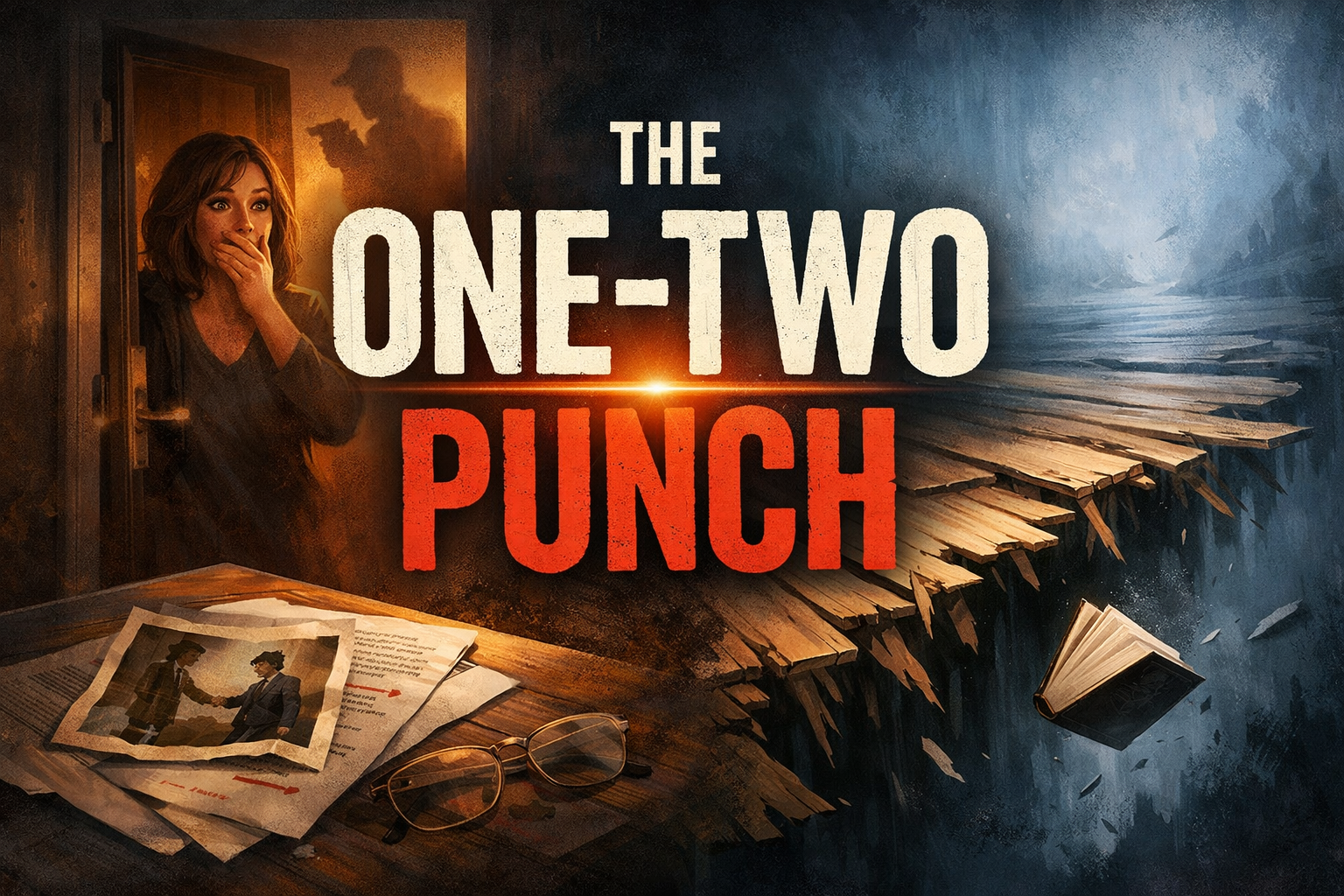
The One-Two Punch: How to End a Chapter So the Reader Has No Choice but to Keep Going
Most writers think a good chapter ending is about surprise.
A gunshot. A scream. A door kicked open. Someone whispering a name they shouldn’t know.
Those things work—sometimes. But they’re unreliable, and worse, they train the writer to chase escalation instead of control. The result is a book that shouts when it should tighten its voice.
The endings that actually make readers turn the page rarely shout... They land. Twice.
This is what I call the one-two punch.
The first punch creates realization.
The second removes the reader’s footing.
It isn’t spectacle. It’s leverage.
The first punch gives the reader new information—something that reorders the scene they just read. A truth surfaces. A motive clarifies. A hidden arrangement is revealed. The reader sits back, recalibrating. Ah. So that’s what’s really going on.
That moment alone is satisfying. Many writers stop there.
The problem is that satisfaction is a resting place.
The second punch kicks the reader into motion.
It reframes the revelation, so it costs something. It raises a personal stake. It exposes danger. It introduces intent. It answers the reader’s brief moment of relief with a quieter, more unsettling thought: Oh. This is worse than I thought.
This is the difference between intrigue and momentum.
Consider how often chapter endings fail because they try to do too much in one move. The writer stacks information, emotion, and threat into a single line, hoping the weight alone will knock the reader over. Sometimes it does. More often, it blurs.
The one-two punch works because it respects the reader’s processing speed.
First: comprehension.
Then: consequence.
In practice, this often means allowing the first punch to feel almost complete. It may even feel like closure. A character believes they understand the situation. A conversation ends. A chapter seems to settle.
Then comes the second punch—often delivered with restraint.
A line of dialogue that reveals intent.
A realization about who benefits.
A sentence that reframes agency.
The second punch simply tilts the floor.
You can see this at work in the strongest novels across genres. Thrillers use it overtly. Literary fiction uses it quietly. Domestic suspense hides it in subtext. Romance often places it in emotional terms rather than plot mechanics. The genre changes, but the structure does not.
Many writers are afraid to pause between the punches. They rush the ending, afraid the reader will lose interest if everything isn’t immediate. But the pause contains the power. That brief moment where the reader thinks they understand—and soon realizes they don’t—this is where tension builds.
Another common mistake is mistaking confusion for suspense. A good one-two punch does not obscure meaning. It clarifies it, then sharpens it. If the reader doesn’t understand what just happened, you haven’t created tension—you’ve created fog.
The best endings are clean. The danger is precise.
You are not tricking the reader. You are partnering with them. You let them arrive at the first insight themselves. You offer the second as a kind of quiet betrayal—one that feels earned.
This is why readers describe these endings with physical language. It took the wind out of me. I had to sit there for a second. I knew I was in trouble.
They don’t say, I was shocked. They say, I couldn’t stop.
If you want to test whether your chapter ending has a one-two punch, ask yourself two questions:
What does the reader understand at the end of this chapter that they did not understand before?
Why does that understanding make the future more dangerous, not safer?
If you only have an answer to the first question, you have a solid ending.
If you can answer both, you have momentum.
Readers don’t keep turning pages because something happened.
They keep turning because something is about to happen, and now they understand exactly why they should be afraid.
That’s the one-two punch.
And once you learn to feel it, you’ll never end a chapter the same way again.