
We’ve all seen it.
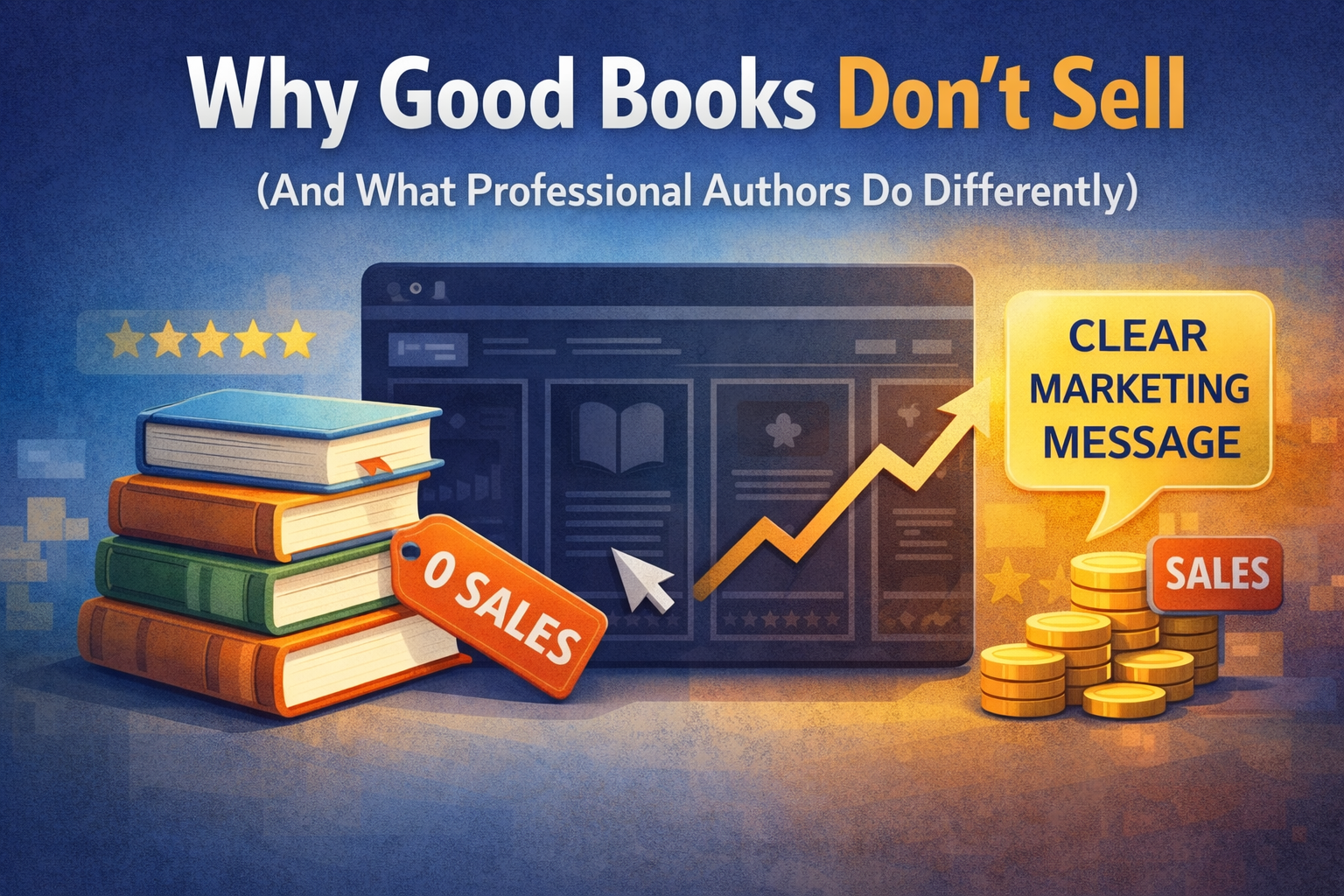
A great book—beautiful writing, carefully edited, wonderfully presented. ARC readers love it. The reviews—when they come—all give 5 stars. And yet the book idles on Amazon like a racecar that never takes off. It does not find its audience. It does not travel.
This vacuum looks like a verdict.
The author thinks the writing’s not good enough. Or worse, maybe they’re not good enough. They try harder. Ramp up social media. Do a blog tour. Lower prices. Add urgency—get this deal before it disappears.
Professional authors pause.
They understand something that takes professional writers years to learn: a good book is not the same as a working book.
“A good book is not the same as a working book.”
Quality Is Necessary, but It Is Not Enough
Most people assume that excellence guarantees success. This allows the writer to stay safely inside their office, pounding the keyboard, perfecting, and wordsmithing—telling themselves that sales will rise if they can be as good as their heroes.
They don’t realize that publishing is an ecosystem.
Quality matters, but quality alone does not tell a reader where a book belongs, what makes it important, or why they should get it now. Good books fail because they lack clarity.
Professional authors know this.
The Invisible Question Every Reader Asks
When a reader encounters a book—online, in a bookstore, in a library—they ask, Is this for me now? Books fail at that moment because their signals are muddled. The category is vague. The promise is diffuse. The experience is difficult to picture.
While, the book might be excellent, its invitation is not. In less than a second, the reader moves on. Professionals diagnose the invitation first.
The Difference Between Merit and Fit
Amateur thinking treats sales as a reward for their hard work, but professional writers see sales momentum as alignment. They know what their readers want and how their book delivers that very thing. They use words that touch their audience—in their announcements, on their cover, and in their conversations. When the presentation doesn’t fit the audience, the solution isn’t more exposure or louder ads. The answer is better placement.
Professional authors ask:
· Does the book’s description identify the right reader?
· What expectations does this book create?
· Do those expectations match the expectations of my readers?
They do not assume the market is broken because they’re campaign ends in crickets. They assume something is unclear—and they look for it.
“Trying Harder” Can Make Things Worse
One of the most painful stages in an author’s career is the moment effort increases, but results do not. Anxious to make something happen, they often:
· Over-explain the book
· Chase audiences who aren’t interested
· Spend money and time without stopping to aim at a specific target
They make more noise instead of greasing the wheels.
Clarity comes from subtraction, not addition. Choose a narrower audience. Refine the message. Adjust the frame.
“Clarity comes from subtraction, not addition.”
Fiction and Nonfiction Fail Differently—but for the Same Reason
Nonfiction books struggle because their promise is unfocused. The reader doesn’t connect with the outcome. Fiction struggles because the experience is unclear. The focus wobbles. In both cases, the failure isn’t about quality. It is about positioning.
Some writers might push back with the idea that this commercializing their art form, but it is a form of respect—respect for the book and respect for the reader. The top names in the industry know this. Consider the positioning of these authors’ works: Nicolas Sparks, Stephen King, and the classic Agatha Christie. They deliver the same experience again and again. The same is true for nonfiction rockstars like Malcolm Gladstone and Brian Tracy. They deliver specific outcomes… every single time.
What Professionals Do When Sales Tank
When a good book doesn’t sell, professionals don’t slide into blame. They assess.
· Does their cover send the right signal?
· Does the category make the right promise?
· Is the description an invitation to the right reader?
· Are they asking the book to do a job it was never meant to do?
Drilling down on these answers, they make small, intentional course corrections.
The Quiet Relief of Understanding
Perhaps the most important difference between amateur and professional authors is emotional. Professionals know their work is sound. They have developed their craft via training, book coaching, or high-level editing. They know sales silence isn’t condemnation. It is information. They know that most books fail by being unclear.
And clarity can be learned.
A good book that doesn’t sell is not a dead end. It is unfinished business.
Not in the writing.
But in the thinking.