
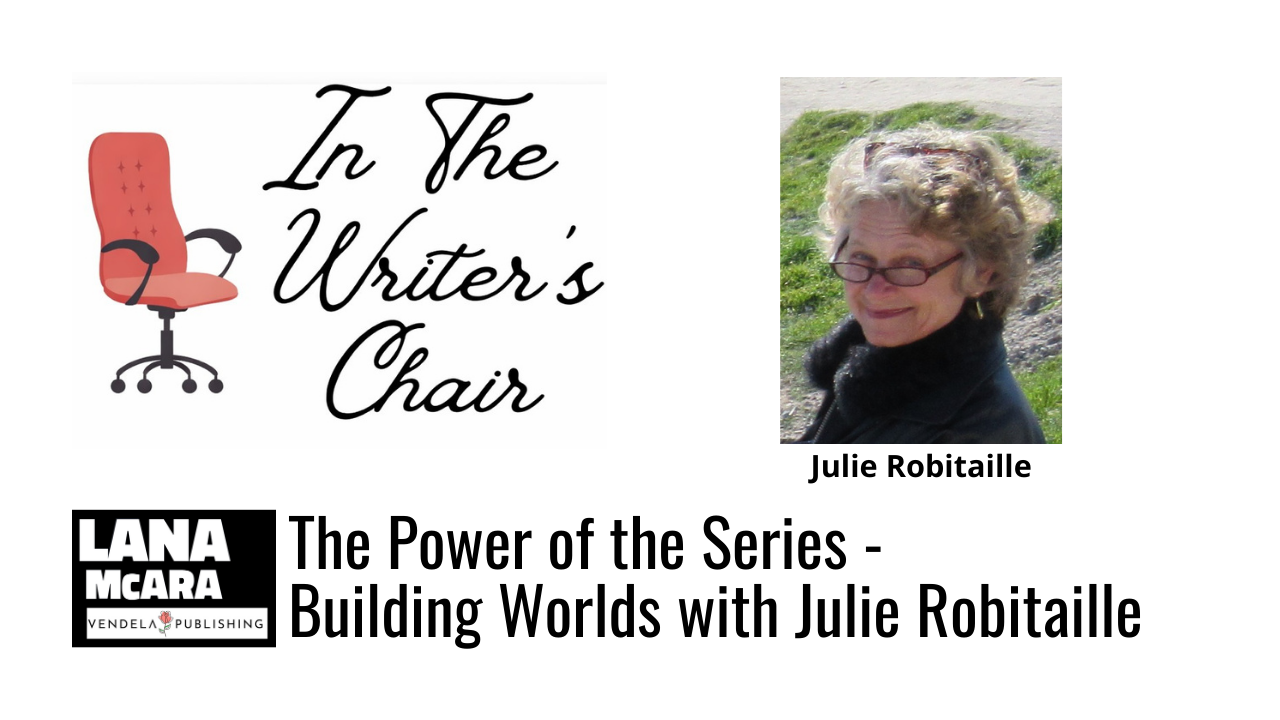
In this conversation, Lana McAra sits down with author and longtime writing instructor Julie Robitaille to explore one of the most practical—and often overlooked—strategies for building a lasting author career: writing in series.
Julie brings decades of experience as both a teacher and a prolific writer, with multiple novels, screenplays, and short story collections to her name. At the center of the discussion is her Cory Marin detective series, a character-driven police procedural set in Gainesville, Florida. Through that lens, she offers a grounded, experience-based look at why series fiction continues to dominate the market—and why it may be one of the smartest paths forward for authors today.
Key Insights from the Episode (watch the full interview here)
1. Series Fiction Builds Reader Loyalty
Readers don’t just fall in love with a single story—they fall in love with a world. Once they connect with characters and setting, they want more. A strong first book becomes a gateway, leading naturally to read-through across the entire series.
2. You Only Have to Build the World Once
One of the most powerful advantages of a series is efficiency. Instead of reinventing characters, setting, and tone with every book, you deepen what already exists. Over time, the setting itself becomes a character, and the world gains richness without requiring constant reinvention.
3. Marketing Becomes Simpler—and More Strategic
Julie highlights a key leverage point: most marketing effort can focus on Book One. Once a reader enters the series, the rest of the books effectively sell themselves. This creates a more efficient use of time, energy, and advertising dollars.
4. Character Development Happens Over Time
Unlike standalone novels, a series allows for gradual, realistic character growth. Relationships evolve. Internal struggles deepen. Readers experience not just a plot, but a life unfolding across multiple books.
5. Organization Is Critical: The “Series Bible”
A practical takeaway: keep a detailed record of characters, traits, and world details. Small inconsistencies—like changing a character’s eye color—can break reader trust. A simple tracking system saves time and protects continuity.
6. Flexibility in Structure
Series can be:
Fully standalone (each book independent)
Sequential (best read in order)
Open-ended (like detective series)
Finite (trilogies or planned arcs)
The key is deciding early how readers will move through your world.
7. Series Create Long-Term Career Momentum
Perhaps the most important takeaway: series writing aligns with a long-game author career. Instead of starting from zero with each book, every new release builds on an existing foundation—of readers, visibility, and story depth.
“Once readers enter your world, they want to stay there.”
About Julie Robitaille
Julie Robitaille is an author, educator, and longtime writing instructor with advanced degrees in English literature and creative writing. She has written multiple novels, screenplays, and short story collections, including a seven-book detective series. Her work is known for blending strong character development with socially grounded storytelling.
Final Takeaway
Writing a series isn’t just a creative decision—it’s a strategic one.
It allows authors to:
Write faster (without starting over each time)
Market smarter (by focusing on entry points)
Build deeper reader relationships
And most importantly, create momentum that compounds over time
For authors serious about building a career—not just publishing a book—this conversation makes a compelling case: Your next book might not be the next step. Your next series might be.