
Some writers plan every chapter before beginning a novel. Others prefer to discover the story as they write.
If you're a discovery writer, or pantser, a detailed outline may feel restrictive. But writing without an outline doesn't have to mean writing without direction.
Pantsing Doesn't Mean Having No Plan
During his conversation with Lana McAra on In the Writer's Chair, author Aaron Ryan described himself as a pantser who uses a few plotting elements.
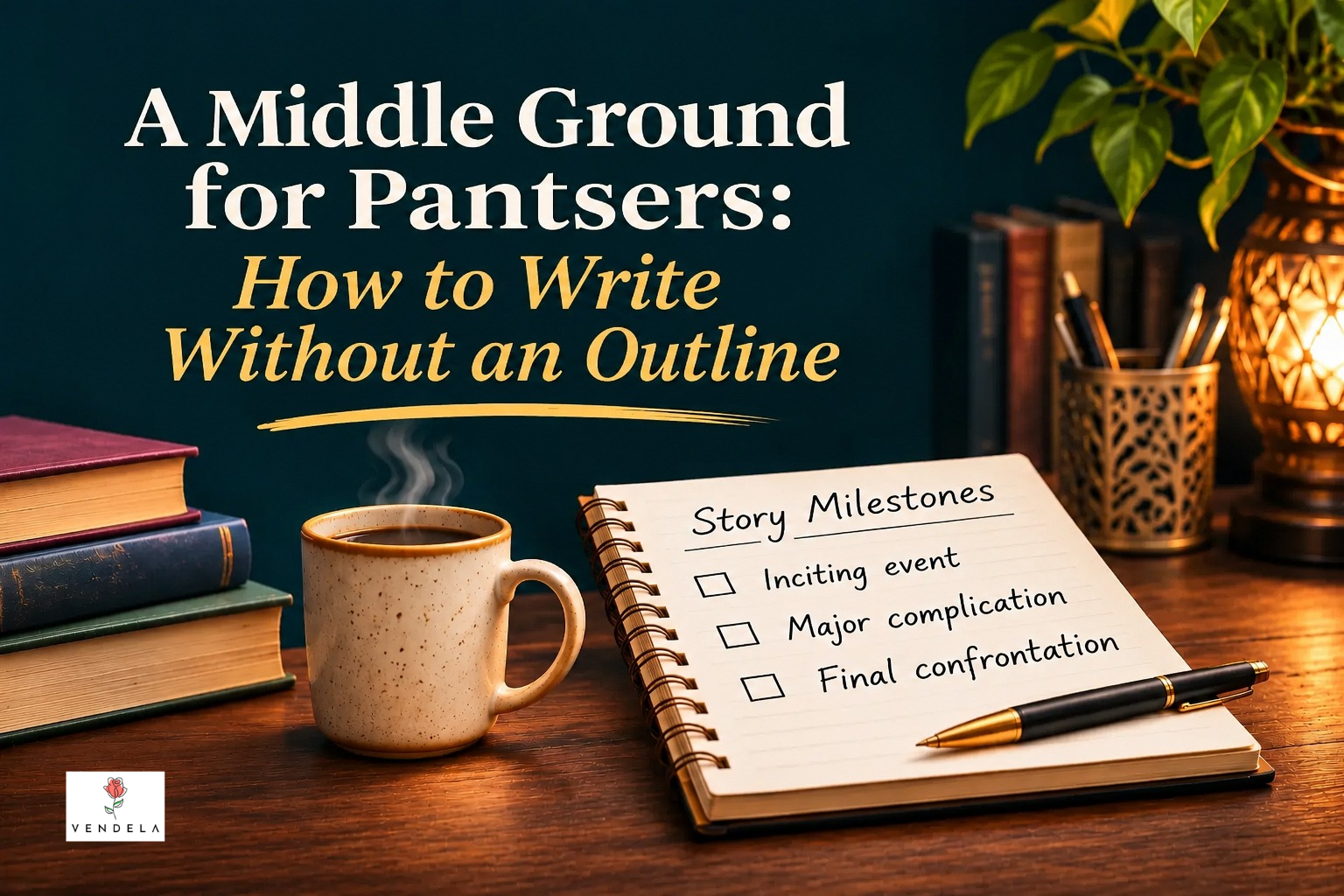
Rather than mapping out every scene, he keeps important story milestones in mind. They give his characters somewhere to go while leaving room for unexpected developments.
Think of those milestones as destinations. You can choose the route as you write.
Choose a Few Story Milestones
Before your next writing session, identify three turning points:
The event that disrupts your protagonist's ordinary life.
A discovery or decision that changes the stakes.
A confrontation or choice that moves the story toward its conclusion.
For example, in a mystery about a woman inheriting an old house, you might know she'll find a hidden letter, uncover a family secret, and confront someone who has lied to her.
You don't need to know every conversation or complication between those moments. That's what you will discover as you write.
Let Problems Reveal Character
Aaron compared storytelling to getting a flat tire on the way to a wedding. The unexpected problem matters, but the character's response tells us even more.
Does your protagonist panic, blame someone else, improvise a solution, or help another person first?
When a scene feels flat, introduce a complication that forces a choice. Then follow the consequences. Let your characters show what they are made of.
Another way to discover unexpected sides of a character is to introduce a relationship that reveals something new about them.
Keep Your Story Moving
Discovery writing can produce wonderful surprises, but it can also lead to scenes that wander.
After drafting, ask yourself:
What changed in this scene?
What did the character learn or decide?
How does this move the story forward?
If an unexpected direction makes the novel stronger, revise your milestones. They're guides, not rules.
That same attention to momentum matters when ending a chapter with a revelation and its consequences.
And if you're truly stuck, changing projects briefly may help. Aaron described returning to a nonfiction book about fatherhood when he struggled with his Talisman series. Writing something that came naturally helped him regain momentum.
Find Your Own Balance
You don't have to choose between outlining every detail and writing with no plan at all.
Try identifying three milestones, writing one scene freely, and checking afterward whether the story has moved forward. Keep some structure but leave room for discovery.
Sometimes the most interesting turns are the ones you never expected.
Inspired by Lana McAra's conversation with Aaron Ryan on In the Writer's Chair. Watch the full interview.
Join our writer's community IN THE WRITERS STUDIO for connection with other writers, free training in writing craft and up-to-date marketing techniques, and practical insights that will make your life easier.